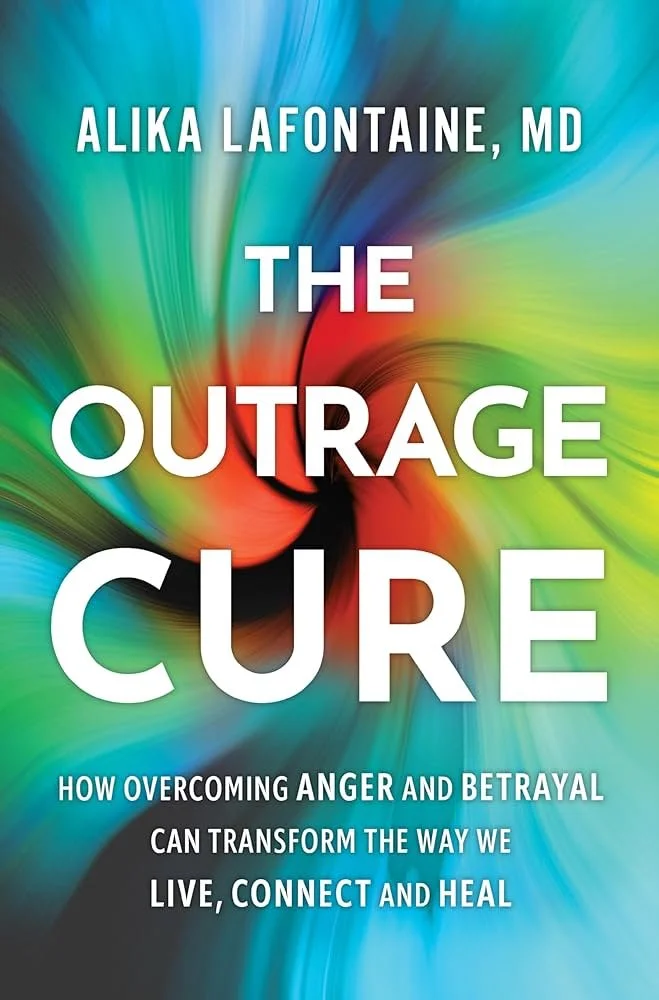
The Outrage Cure
Anger is a call for help.
Outrage begins when we stop believing the people we’re asking can or will help us.
Indifference begins when we stop believing anything will change.
There is a way back.
WHY OUTRAGE?
Something happens between anger and giving up.
Anger tells us something is wrong. It calls for attention, help or change.
But when the people or institutions we're asking don't respond, anger can become something else. We stop asking only for the problem to be fixed. Betrayal changes what we expect from each other.
And if nothing changes for long enough, even outrage can disappear. What replaces it isn't peace. It's indifference.
The Outrage Cure maps this emotional territory, and the path back.
THE PROGRESSION
ANGER
Something is wrong.
A call for attention, help or change.
OUTRAGE
You won't help.
When repeated failure becomes betrayal, what we want begins to change.
INDIFFERENCE
Nothing will change.
Eventually, we can stop believing that asking, fighting or even caring will make a difference.
These aren't three versions of the same problem. They require different responses.
BETRAYAL
Outrage isn’t just about what happened. It’s about what was supposed to happen.
We expect things from the people and institutions we depend on: help, fairness, safety, honesty, accountability.
When those expectations are repeatedly violated, the problem becomes more than the original harm. The relationship itself changes.
Betrayal is the root of outrage.
The deeper the relationship, the deeper the expectation, and the greater the potential for outrage when that expectation is broken.
THE TURN
Outrage changes when suffering becomes part of what we want.
Accountability can be necessary. Consequences can be proportional. People can lose positions, power or trust because of what they have done.
The turn comes when correction is no longer enough. We begin to want the other person to suffer, not because suffering is necessary for correction, but because their suffering feels like justice.
The question isn't whether there should be consequences. It's what we are trying to accomplish with them.
THE COST
Outrage asks us to make a trade.
The danger isn't that we care too much. It's that outrage can change what we're willing to sacrifice.
A relationship. Our credibility. A community. Our sense of proportion. Sometimes even the values that made us angry in the first place.
In the moment, the trade can feel worth it. Retribution promises relief, certainty and the satisfaction of seeing a wrong answered.
But what if winning the fight costs us something we never meant to lose?
THE WAY BACK
There is a way back.
Moving past outrage doesn't require us to pretend the harm didn't happen, abandon accountability, or reconcile with everyone who hurt us.
It means understanding what our anger was asking for, recognizing what betrayal changed, and deciding deliberately what we are, and are not, willing to trade away.
The goal isn't to care less. It's to make sure outrage doesn't decide what matters most.
THE OUTRAGE CURE
A practical map for finding our way back.
We live in a time when anger is everywhere, trust is collapsing, and walking away from each other can feel easier than finding a way forward.
The Outrage Cure explores why anger becomes outrage, why outrage can eventually give way to indifference, and what we can do before we trade away the relationships, communities and values that matter most to us.
What you'll learn
Recognize the progression.
Understand the differences between anger, outrage and indifference.
Understand the turn.
See how betrayal changes what we want and when accountability can become retribution.
Find a way forward.
Respond differently to anger, outrage and indifference without abandoning accountability.
PRAISE FOR THE OUTRAGE CURE
“In a world boiling over with rampant anger, escalating outrage, political division, and indifference for others, The Outrage Cure is a balm for the soul.”
ANDRÉ PICARD
Health columnist, The Globe and Mail, and author of Neglected No More
“With incredible courage and integrity, Dr. Alika Lafontaine explores the anger that ruptured the bond he had with his closest friend and shows us how we might reclaim lost bonds by reclaiming our better selves.”
DR. BRIAN GOLDMAN
Author of The Casino Shift
“This is an honest explanation of what anger is and how we need to work through it for the health of ourselves, homes and nations.”
TANYA TALAGA
Bestselling author of The Knowing

ABOUT THE AUTHOR
Alika Lafontaine has spent much of his life trying to understand what happens when people stop believing things can change.
Dr. Alika Lafontaine is a physician, author and health-system leader. A practicing anesthesiologist in northern Alberta, he became the first Indigenous physician and youngest doctor to serve as President of the Canadian Medical Association.
His career has placed him inside some of the hardest conversations in Canadian healthcare: inequity, institutional failure, reconciliation, accountability and what happens when trust between people and systems breaks down.
The Outrage Cure turns that lens inward. Drawing on personal experience, relationships, medicine and two decades of leadership, Lafontaine explores what anger is asking from us, what betrayal changes, and how we can find our way back without abandoning the things that matter.
GET THE BOOK
The Outrage Cure
How Overcoming Anger and Betrayal Can Transform the Way We Live, Connect and Heal
Available in hardcover, ebook and audiobook.